
A friend stopped me by the parish door once, fingers still damp from the font, and asked whether any of this was actually in Scripture. He wasn’t picking a fight. He’d heard that Catholics invented holy water, and nobody had ever given him a plain answer.
So here’s a plain one. The exact words appear in the Bible once. The practice behind them runs from Exodus all the way to the Gospel of John, and the Catholic ritual we use today grew out of that soil across several centuries.
Both halves are true. So: the one verse, then the wider pattern, then the little font by your front door.
The One Verse Where the Words Show Up
Turn to Numbers 5:17. In many English translations, including the older Catholic ones, the priest is told to take holy water in an earthen vessel and mix into it dust from the floor of the tabernacle.
That’s the lot. One verse, one ritual, one book of the Law. When someone asks is holy water in the Bible and means the phrase itself, that’s the honest reply. Anyone who says the words are scattered all over Scripture hasn’t looked.
But notice what the verse takes for granted. It never explains what holy water is, or argues that ordinary water can be set apart for God. It assumes you know, because Israel had been doing exactly that for generations.
Is Holy Water in the Bible? Washing Runs Through the Whole Story
Ask it that way and the answer opens up. Water set apart for sacred use turns up again and again in Scripture. Only the label is rare.
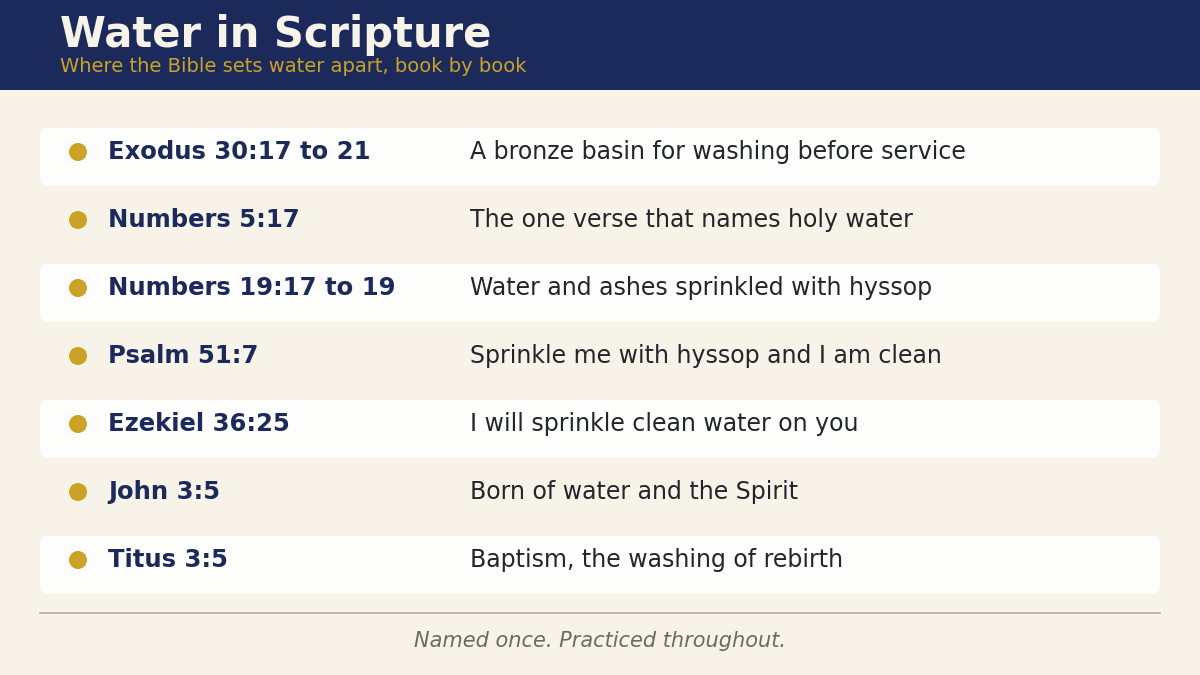
In Exodus 30:17 to 21, God commands a bronze basin at the entrance of the tent of meeting. Aaron and his sons wash there before they serve, and not because their hands were dirty. You don’t approach God casually.
Numbers 19:17 to 19 goes further. Ashes from a sacrificed red heifer are stirred into fresh running water, and a ritually clean man dips hyssop in it and sprinkles anyone who has touched a grave, on the third day and again on the seventh. Blessed water, applied by sprinkling, for purification. If that sounds familiar from Mass on Sunday, it should.
The psalms and prophets carry the image inward. Psalm 51:7 prays to be sprinkled with hyssop and made clean, and through Ezekiel God promises to sprinkle clean water on his people (Ezekiel 36:25). By then the washing isn’t about a courtyard or a corpse. It’s about a heart.
What Jesus Does With Water
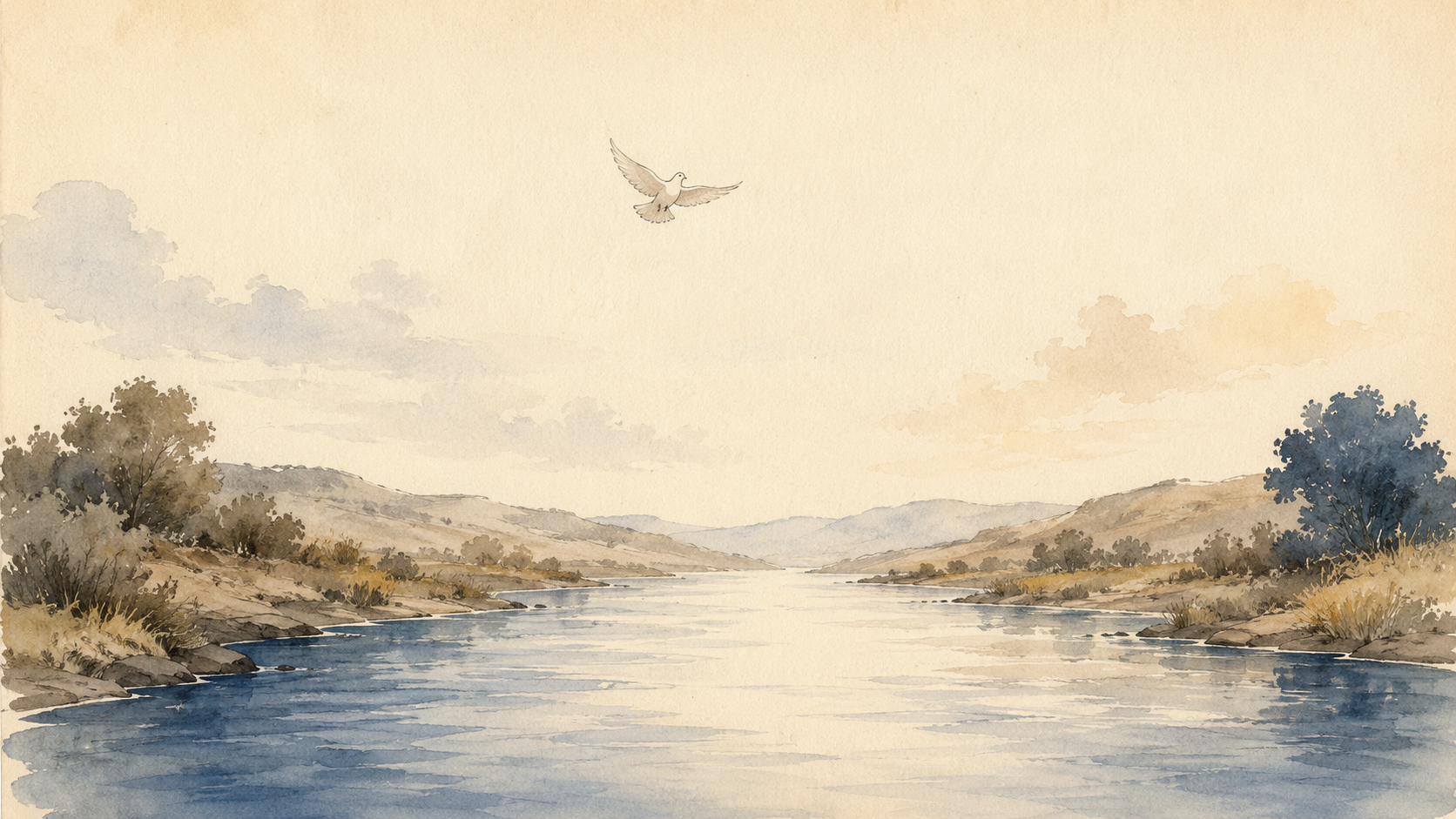
Then Christ steps into the Jordan, and water stops pointing at the thing and becomes it.
He tells Nicodemus that nobody enters the kingdom without being born of water and the Spirit (John 3:5). St. Paul calls baptism the washing of rebirth (Titus 3:5). Centuries of ritual washing find their point in a sacrament, and everything Catholics do with blessed water afterward is a memory of that day at the font.
Which is why sprinkling isn’t a leftover ceremony hunting for a purpose. It points back to your own baptism, every time.
How the Catholic Practice Actually Developed
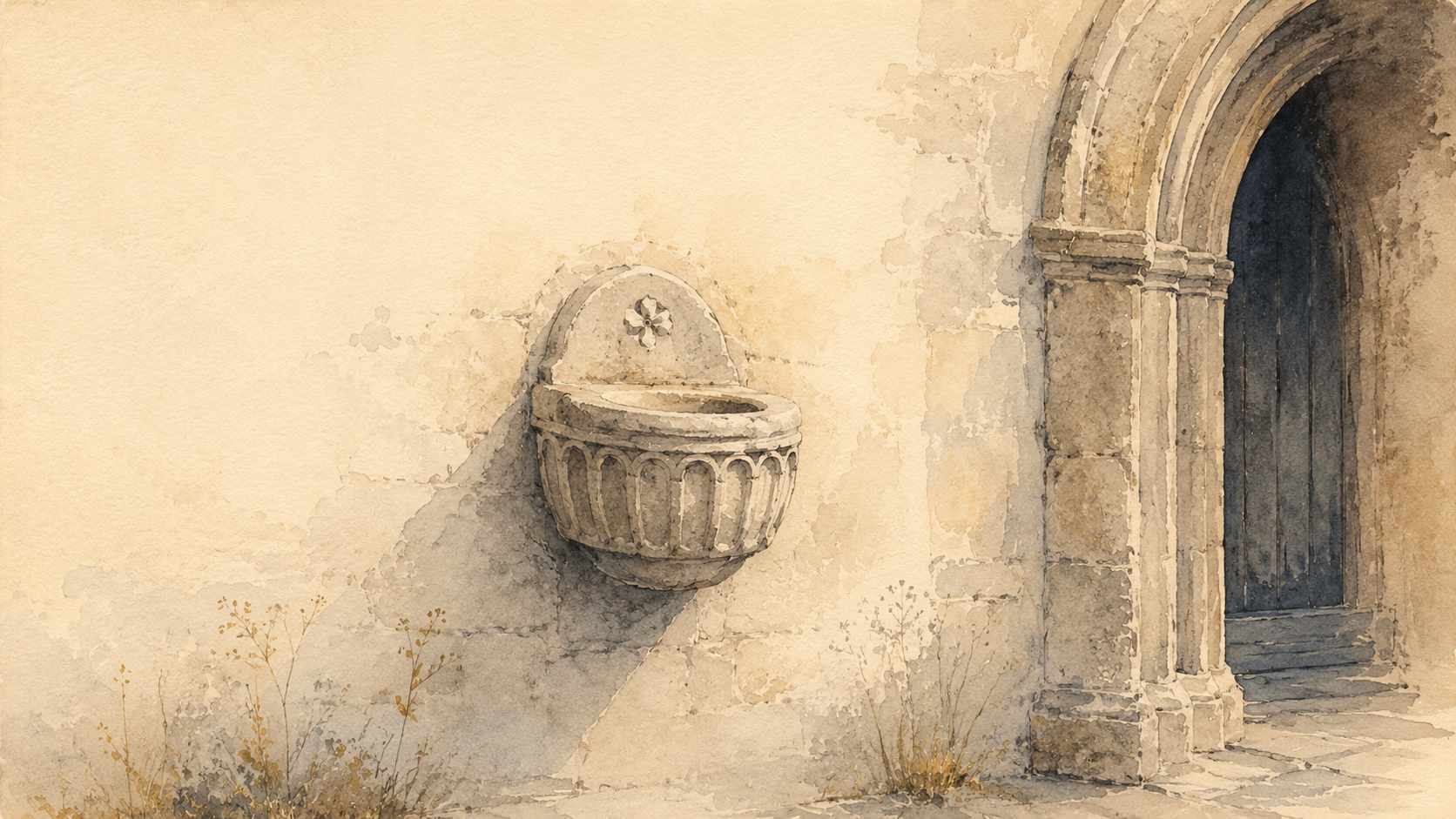
Here’s where honesty matters more than tidiness. The water in a stoup by the church door can’t be traced verse by verse. It reaches us through Tradition, and the paper trail starts later than most people assume.
The clearest early evidence is fourth and fifth century. A prayer book associated with Serapion, a fourth century bishop in Egypt, contains a blessing of water, and so does a Syriac text from the fifth or sixth century. Firm historical testimony doesn’t reach back past the fifth century, and a letter sometimes credited to a second century pope turns out not to be his at all.
In the West the Sunday blessing became the norm in the ninth century, when Pope Leo IV directed every priest to bless water before Mass and sprinkle the people. Hincmar of Reims added a detail any Catholic would recognize: those who wished could carry some home in a clean vessel and sprinkle their houses, their fields, and their animals.
So a family keeping blessed water at home in a bottle is a habit roughly eleven hundred years old, neither apostolic nor modern.
So Is Holy Water Biblical, or Just Catholic?
Both, and the Church is careful about the category. Is holy water in the Bible as a command with chapter and verse? No. Is it rooted in what Scripture does with water from Genesis onward? Plainly yes.
The name for it is sacramental, and that word is doing real work. The Catechism of the Catholic Church describes sacramentals as sacred signs instituted by the Church that always include a prayer, often joined to a sign such as the sprinkling of holy water, which recalls baptism.
The limits are stated just as plainly. Sacramentals don’t confer grace the way the sacraments do. By the prayer of the Church they prepare us to receive grace and dispose us to cooperate with it.
So it isn’t magic, and it isn’t nothing. It’s a prayer you can hold in your hand.
Who Blesses It, and Can You Do It Yourself?
A priest or a deacon blesses water using the Church’s own rite. Mixing in salt is an old custom that today’s books leave optional.
A lay person can’t turn water into holy water. What a lay person can do is ask. Most parishes will fill a clean bottle for you and won’t charge a cent, and the shrine at Lourdes gives its water freely to pilgrims. We laid out every route we know of in our guide on where to get holy water.
Keeping Some at Home
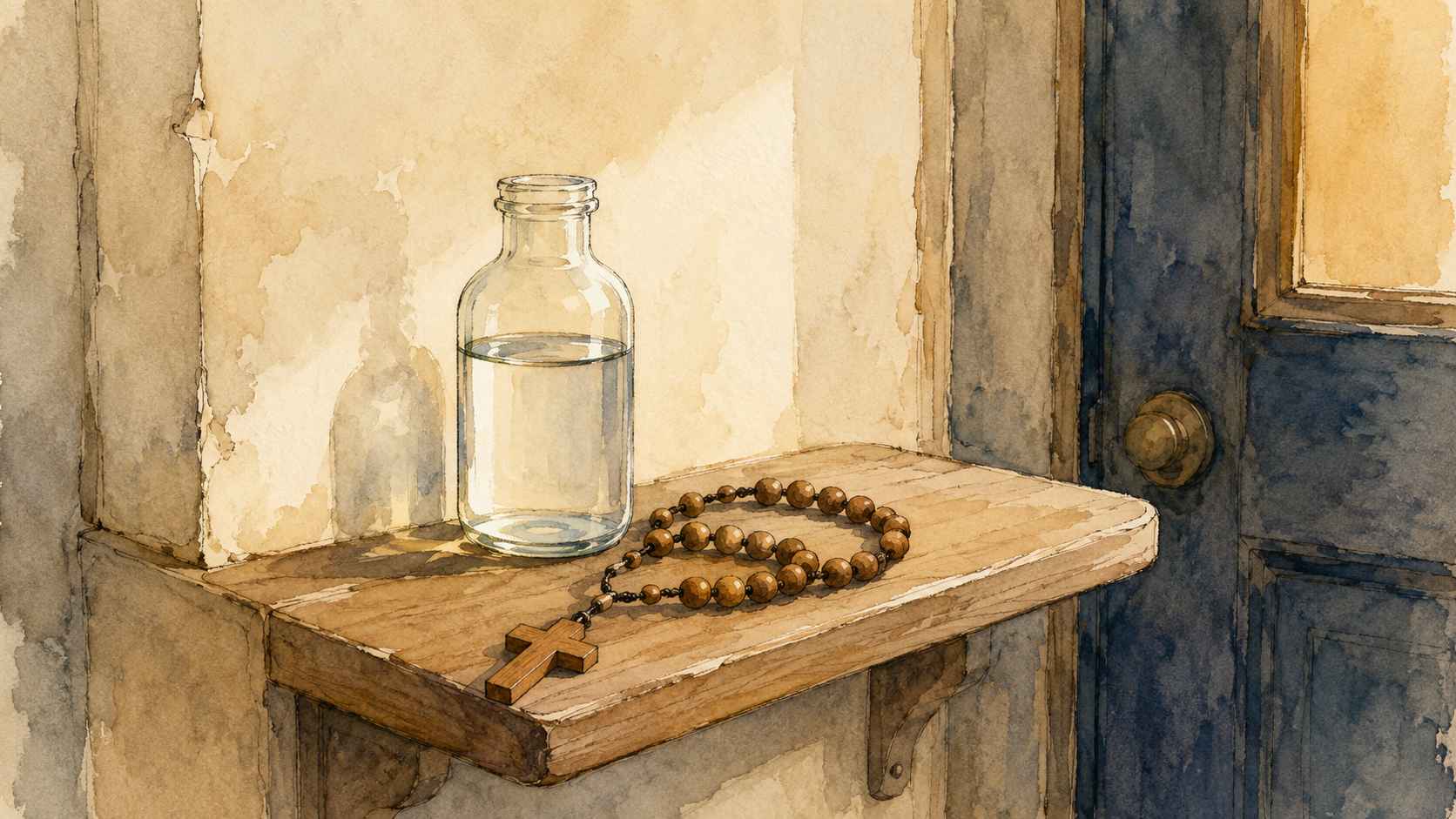
If all this has left you wanting a bottle within reach of the front door, that’s a good instinct, and an old one. Our water is hand collected at the spring at Massabielle and sent out as a devotional keepsake, in glass, with a prayer written by hand. Sizes are on our home page and the gift sets are in our Etsy shop.
Then use it the way your grandmother would have. Our guide on how to use holy water at home covers the ordinary questions, can you drink holy water answers the one everybody asks first, and the story of the spring at Lourdes is worth an evening.
And if you’d rather just pray with us, The Daily Amen sends one short prayer a day. Nothing else.
One note, in the spirit of the honesty this article is about. Holy water is a devotional religious keepsake, not for drinking or medicinal use, and we promise no outcomes from it. It carries the prayer of the Church, and the Church makes no guarantees about what God will do with any prayer.
Key Takeaways
- Is holy water in the Bible by name? Once, at Numbers 5:17, and nowhere else.
- Blessed water sprinkled for purification appears repeatedly, from Exodus 30 to Ezekiel 36.
- John 3:5 and Titus 3:5 are where the whole pattern of washing lands, in baptism.
- Catholic blessings of water are documented from the fourth century, and the Sunday blessing became standard by the ninth.
- Holy water is a sacramental. A prayer joined to a sign, never a charm.
Frequently Asked Questions
Is holy water biblical?
Yes, in the sense that its logic is scriptural. Setting water apart by prayer and sprinkling it for purification is commanded in the Law, promised by the prophets, and fulfilled in baptism. The particular Catholic rite, though, comes from Tradition rather than a chapter and verse.
Where does the Bible mention holy water by name?
Numbers 5:17, where the priest takes holy water in an earthen vessel and adds dust from the tabernacle floor. It’s the only verse where many English translations use the phrase.
Did Jesus ever use holy water?
The Gospels don’t show him blessing water for sprinkling. They show something greater. He was baptized in the Jordan and made water the means of new birth, which is what every Catholic font refers back to.
Can I make holy water at home?
Not on your own. A priest or deacon blesses it with the Church’s rite. Ask at your parish, collect it at a shrine, or order from a seller who is honest about where it came from.