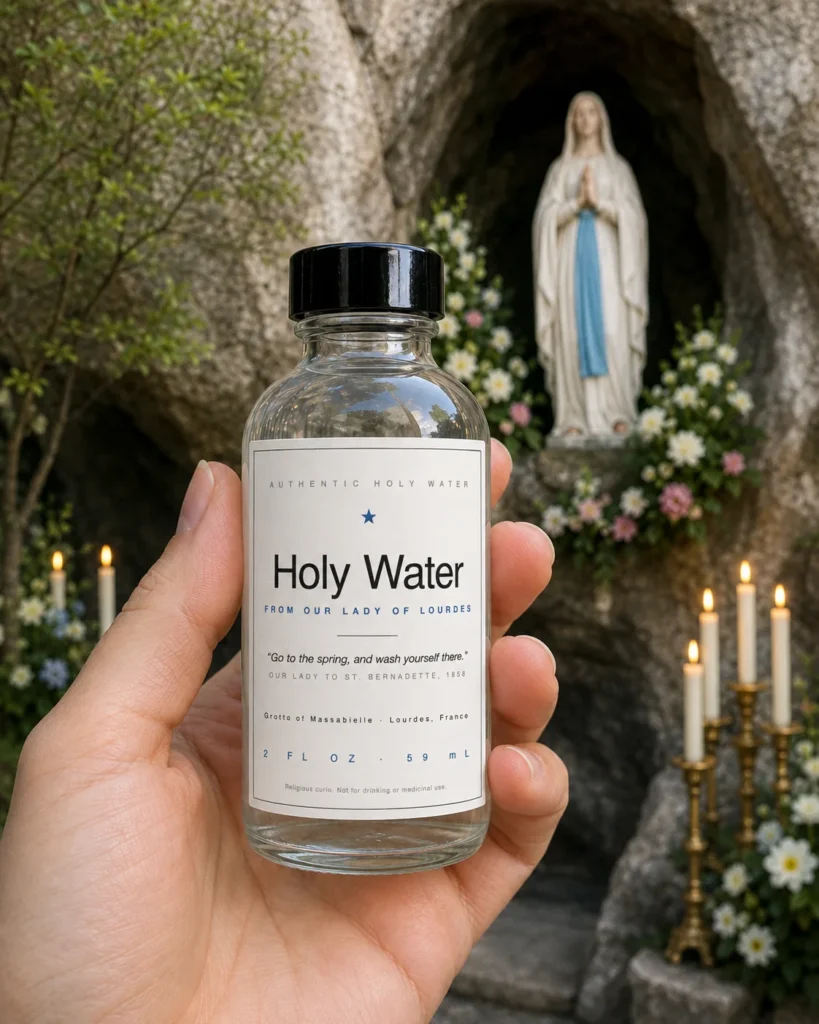
Can you drink holy water? The short answer is yes. Catholics have done it for generations, and to this day pilgrims cup their hands and drink at the spring in Lourdes. Holy water is blessed water, and the Church has never forbidden the faithful from drinking a little of it. What matters is the spirit you bring to it. Holy water is a sacramental, a holy sign meant to draw your heart toward God. It is not a medicine and not a good luck charm.
The short answer, and where it comes from
Blessed water is water a priest has set apart with prayer, often with a little blessed salt added. Once it is blessed, the faithful use it in all sorts of ways. They bless themselves with it, sprinkle it through the home, keep it near a sick bed, and yes, some drink a small amount as an act of devotion. None of that goes against Church teaching.
Drinking holy water became especially common at holy springs, where the water itself is part of the story. Lourdes is the most famous of these.
Why pilgrims drink at the Lourdes spring
In 1858, a young girl named Bernadette Soubirous saw a series of apparitions of Our Lady at a rocky grotto in Lourdes, France. During one of them, Our Lady told her, “Go, drink at the spring and wash yourself there.” Bernadette scratched at the muddy ground, and a spring rose up that still flows today.
Ever since, pilgrims by the millions have traveled to that spring to pray, to wash, and to drink. The Sanctuary of Lourdes makes the water freely available at taps and fountains for exactly this purpose. So when people ask whether you can drink holy water from Lourdes, the answer is written right into the story of the place. Drinking at the spring is part of the devotion.
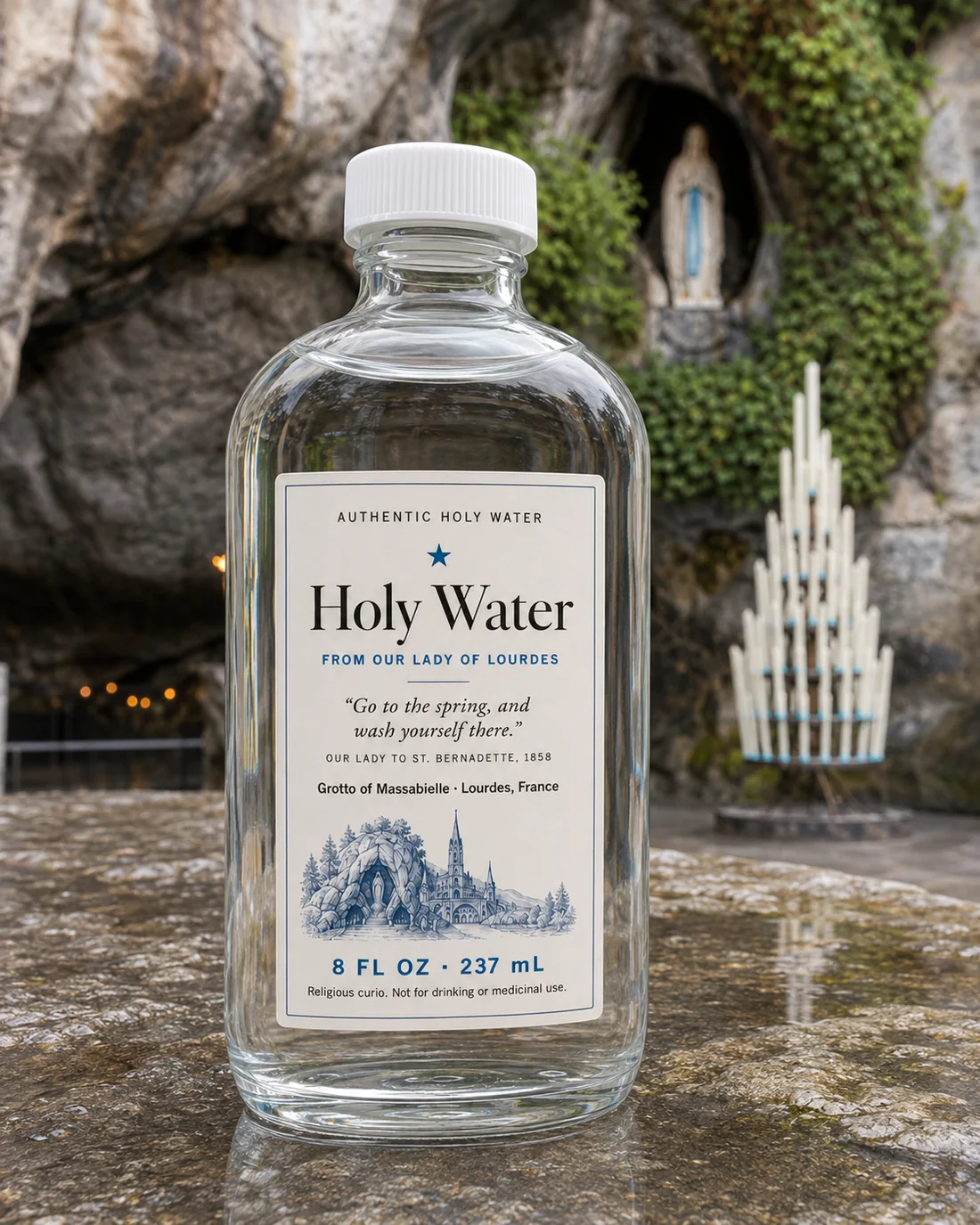
Is holy water safe to drink?
This is a fair and sensible question, and it deserves a plain answer. Water blessed at your parish is ordinary tap water that has been set apart with prayer. The blessing does not change it chemically. If the tap water was safe before the blessing, it is safe after.
Water gathered from a natural spring, including Lourdes, is a little different. It is real spring water, and the Sanctuary tests and manages its supply so that pilgrims can drink from the fountains. Water that has been bottled and stored for a long time is another matter. Any water that sits in a warm place for months can pick up a stale taste or grow cloudy, the same as a forgotten bottle left in your car. Use common sense. Keep it clean, keep it sealed, and store it somewhere cool and dark.
How most Catholics actually use holy water at home
Here is something worth knowing. While you certainly may drink a little holy water, most Catholics rarely do. The everyday use of holy water at home is blessing, not drinking.
People keep a small font by the front door and bless themselves with the sign of the cross as they come and go. They sprinkle a few drops through a new home, over a family gathering, or in a room where someone is sick. Parents trace a cross on a child’s forehead at bedtime. During storms or times of worry, many reach for holy water as a simple, steadying prayer. The point is that holy water is meant to be used, not left on a shelf.
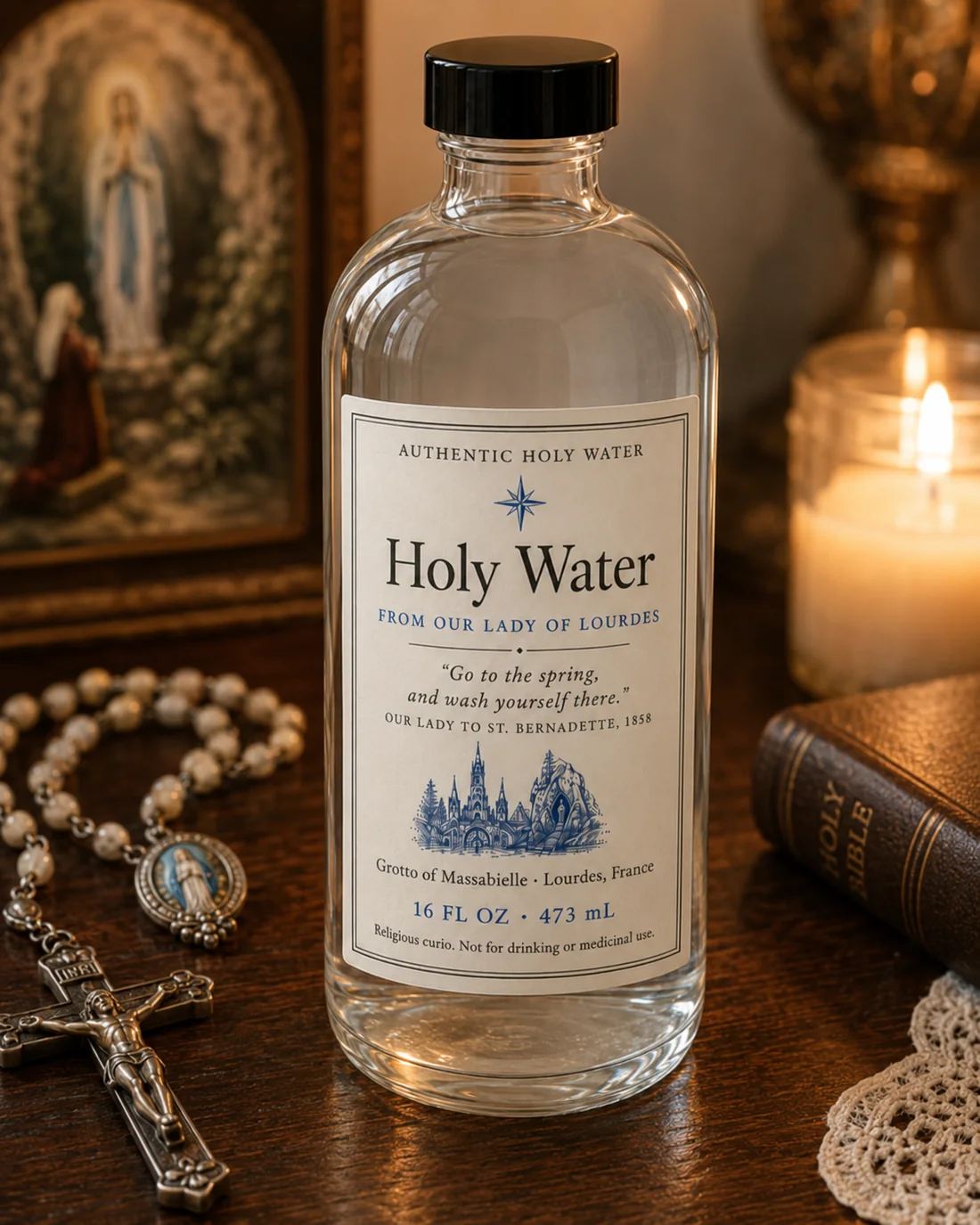
How to keep holy water fresh
If you want to keep a bottle for a long time, a few simple habits help.
- Store it in glass rather than plastic when you can. Glass holds no odors and keeps the water tasting clean.
- Keep the bottle sealed and out of direct sunlight, somewhere cool and dark like a cabinet or a drawer.
- Pour from the bottle rather than dipping fingers into it, which keeps it from going cloudy.
- If a batch ever looks murky or smells off, do not drink it. Pour it reverently onto bare earth or into a church font, never a household drain, and start fresh.
A note on what holy water is, and is not
The Church treats holy water as a sacramental. It is a holy sign that stirs devotion and opens the heart to grace through the prayer of the Church. It is not magic, and it is not medicine. Genuine faith never treats a blessed object like a charm that forces an outcome.
Our own Lourdes water is offered in that same spirit, as a devotional religious keepsake. It is a religious curio, not a food, drink, or medicinal product, and we make no medical, healing, or miracle claims and no promises about outcomes. If you or someone you love is unwell, holy water is a beautiful companion to prayer, and it is never a substitute for a doctor.
Key takeaways
- Yes, you can drink holy water. The Church has never forbidden it, and pilgrims drink at the Lourdes spring to this day.
- Blessing water does not change it chemically. Safe water stays safe. Store any water clean, sealed, cool, and dark.
- Most Catholics use holy water for blessing far more than for drinking.
- Holy water is a sacramental that draws the heart to God. It is not medicine and not a charm.
Common questions
Can you drink holy water from a church font?
It is better not to. A church font is shared by many hands, so the water there is meant for blessing yourself, not for drinking. If you want water to drink, ask for some from the parish supply or use water from a holy spring like Lourdes.
Can children drink holy water?
A small amount will not harm a healthy child, but there is no need for it. Blessing a child with the sign of the cross is the more common and fitting practice.
Does holy water expire?
The blessing does not expire, but the water can go stale like any water. Keep it clean and sealed, and replace it if it ever looks or smells off.