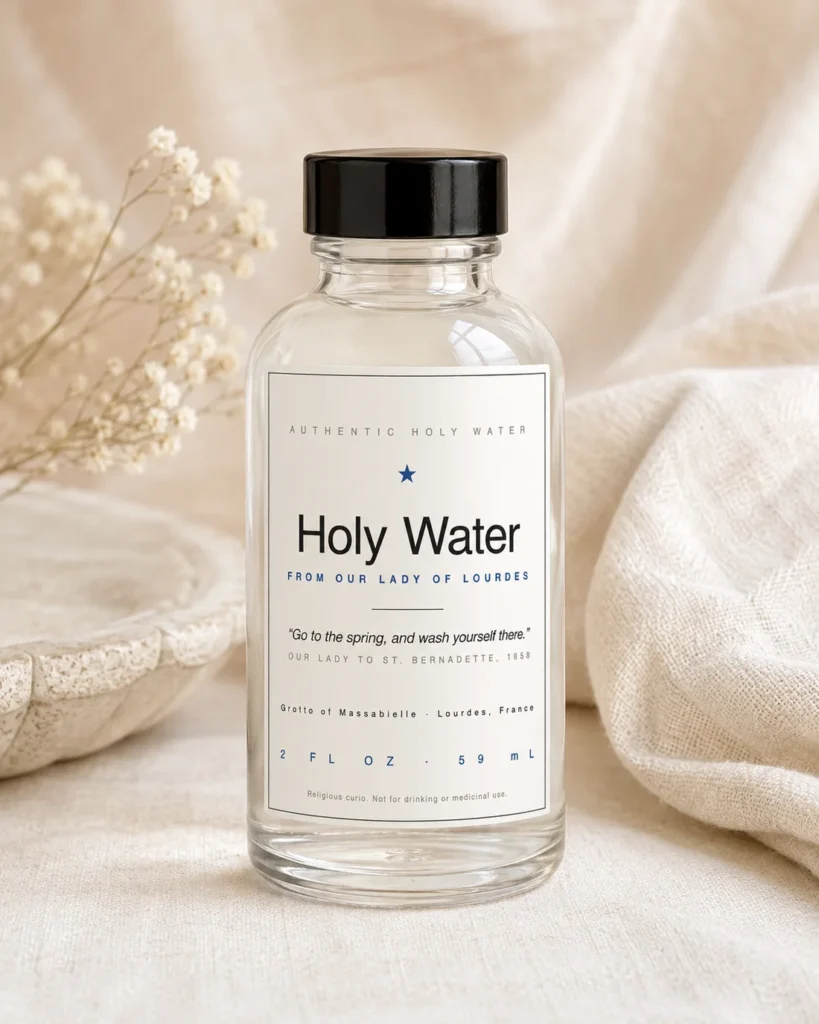
Walk into most Catholic gift shops and you will find a little shelf of empty vessels near the medals and rosaries. Some are glass, some are plastic, a few are shaped like the Grotto. They sit there waiting for one thing, to be filled and carried home. Choosing among them feels like a small decision, but the bottle you pick is the thing that keeps a blessing close to your family for years.
Good holy water bottles do three quiet jobs. They hold the water without leaking, they keep it clean, and they make it easy to reach for when you want to bless yourself or your home. This guide covers how to choose one, fill it, and care for it so the water inside stays fresh and reverent.
One honest note before we start. Our own bottles come already filled with water gathered at Lourdes and are meant as a devotional keepsake, not a medicine. More on that near the end.
What makes a good holy water bottle
Empty and waiting to be filled, or already sealed as a keepsake, the same things matter.
A cap that will not weep comes first. You want a seal that stays shut in a coat pocket, a purse, or a suitcase. Screw caps and flip spouts both do the job. Some bottles use a spout cap you press on one side to open, which lets you place a drop or two without spilling a thing.
The opening matters too. A narrow neck pours a controlled trickle and resists spills. A wider mouth is easier to fill and to clean. Think about how you will use it and pick accordingly. Some people even look for a small holy water water bottle to carry the way they carry any water bottle, which is a fine reason to favor a slim, sealed design.
Glass or plastic holy water bottles: which is right for you
This is the question people ask most, and both answers are correct depending on your need.
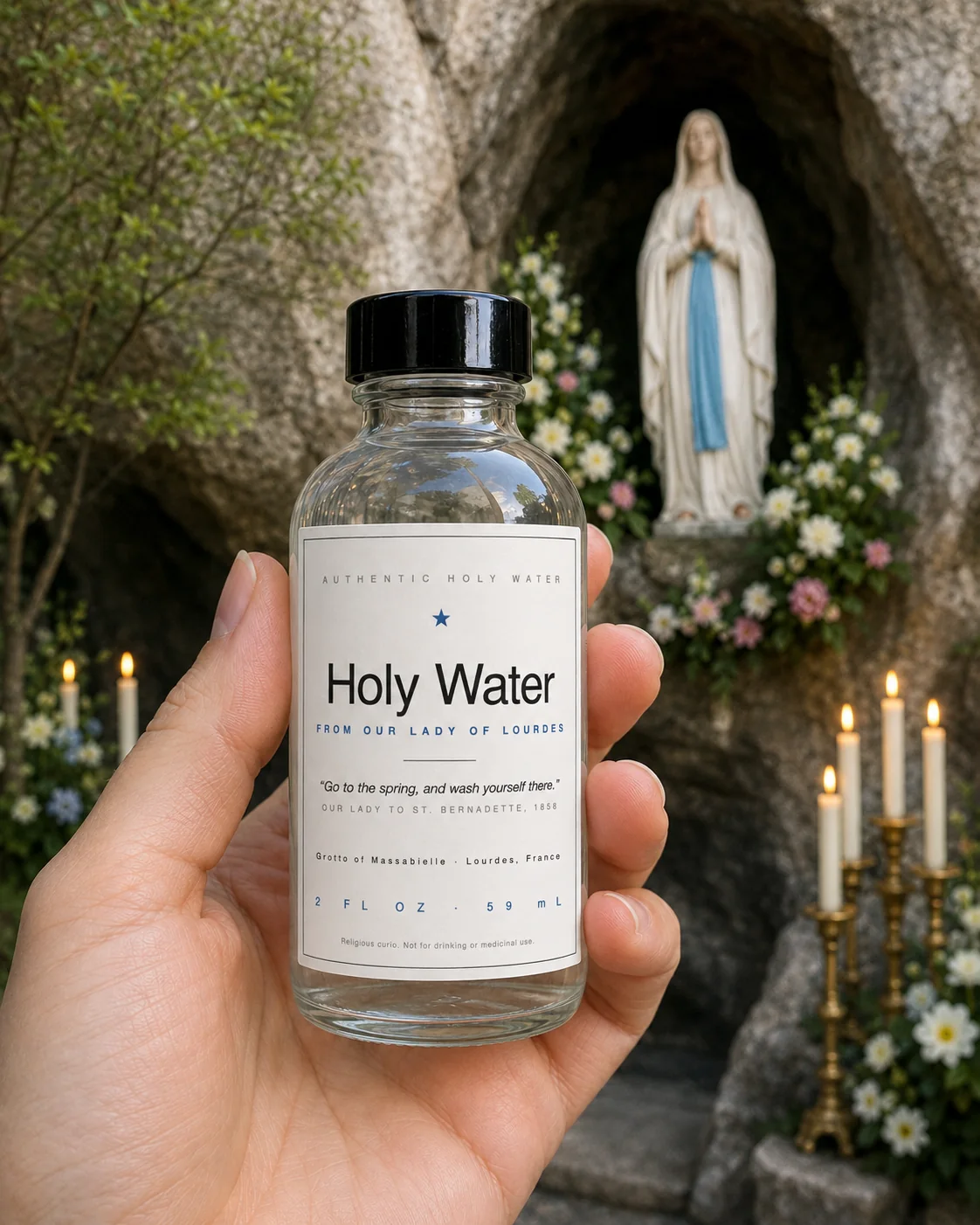
Glass has been the traditional choice for sacred use, and for good reason. It does not absorb odors, it wipes clean, and you can see the water through it, a quiet reminder of what it holds. A well made glass bottle feels worthy of the water. Its one weakness is plain: drop it on a tile floor and it can break.
Plastic earns its place too. Food grade plastic is light and nearly unbreakable, which is why parishes hand out small plastic bottles by the case and carry them on pilgrimage. The trade off is that plastic can cloud over the years and soften in a hot car.
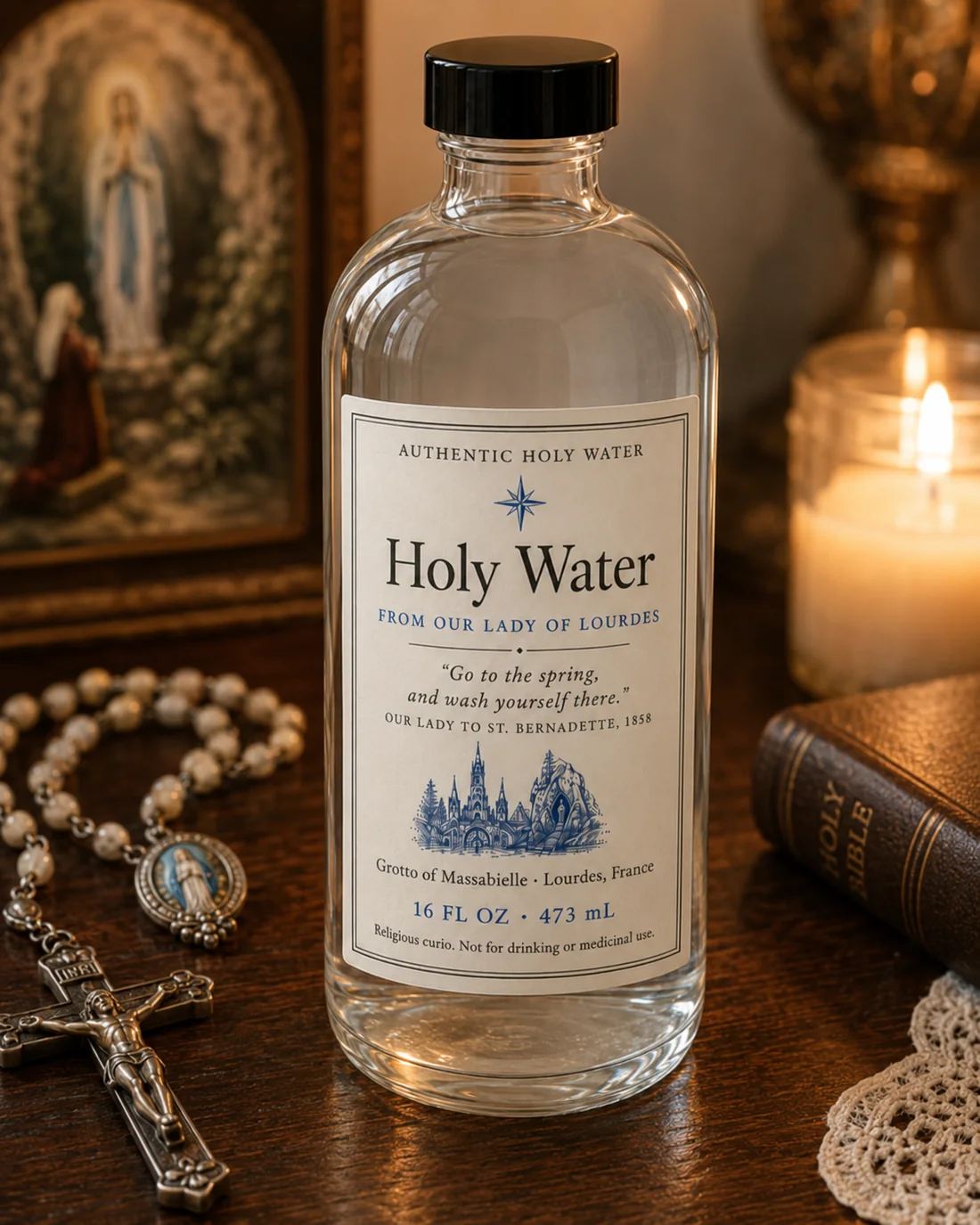
So if the bottle will live on a shelf or a home altar, glass is lovely. If it rides in a bag, a pocket, or a child’s hand, plastic is the practical pick. Plenty of families keep one of each. For a keepsake meant to last, glass holy water bottles are hard to beat, which is why the water we gather at Lourdes is sealed in glass.
What size holy water bottle should you get
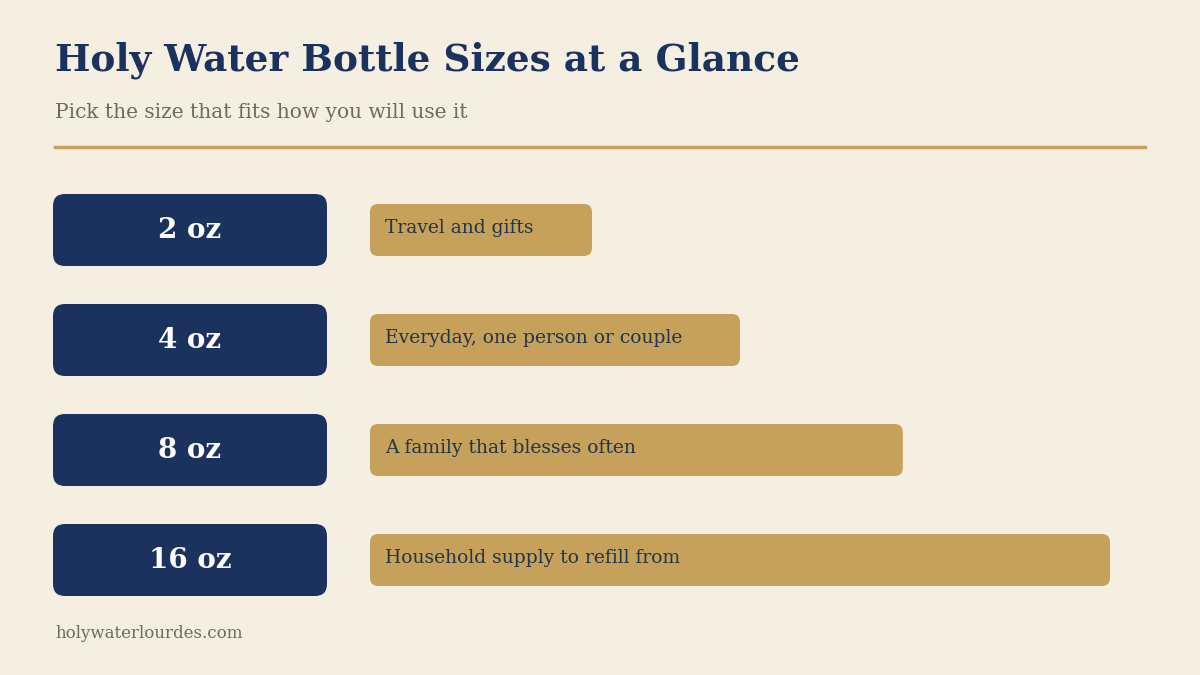
Bottles run from tiny pocket vials to larger bottles for the home. There is no wrong size, only the size that fits how you will use it.
A small 2 ounce bottle slips into a bag or glovebox and is perfect for travel or a gift. A 4 ounce bottle is the everyday size for one person or a couple. An 8 ounce bottle suits a family that blesses itself often and refills a font by the door. A 16 ounce bottle is the one you keep as your household supply and pour from into the smaller ones.
If you are not sure, start in the middle. A 4 or 8 ounce bottle covers most people well, and you can always refill a smaller one from it at home.
How to fill your holy water bottle
An empty bottle is only half of it. Here is how to fill one honestly and keep it clean.
Wash and dry the bottle first. Residue and old limescale are not reverent, and a clean vessel keeps the water clear. Rinse it well and let it dry.
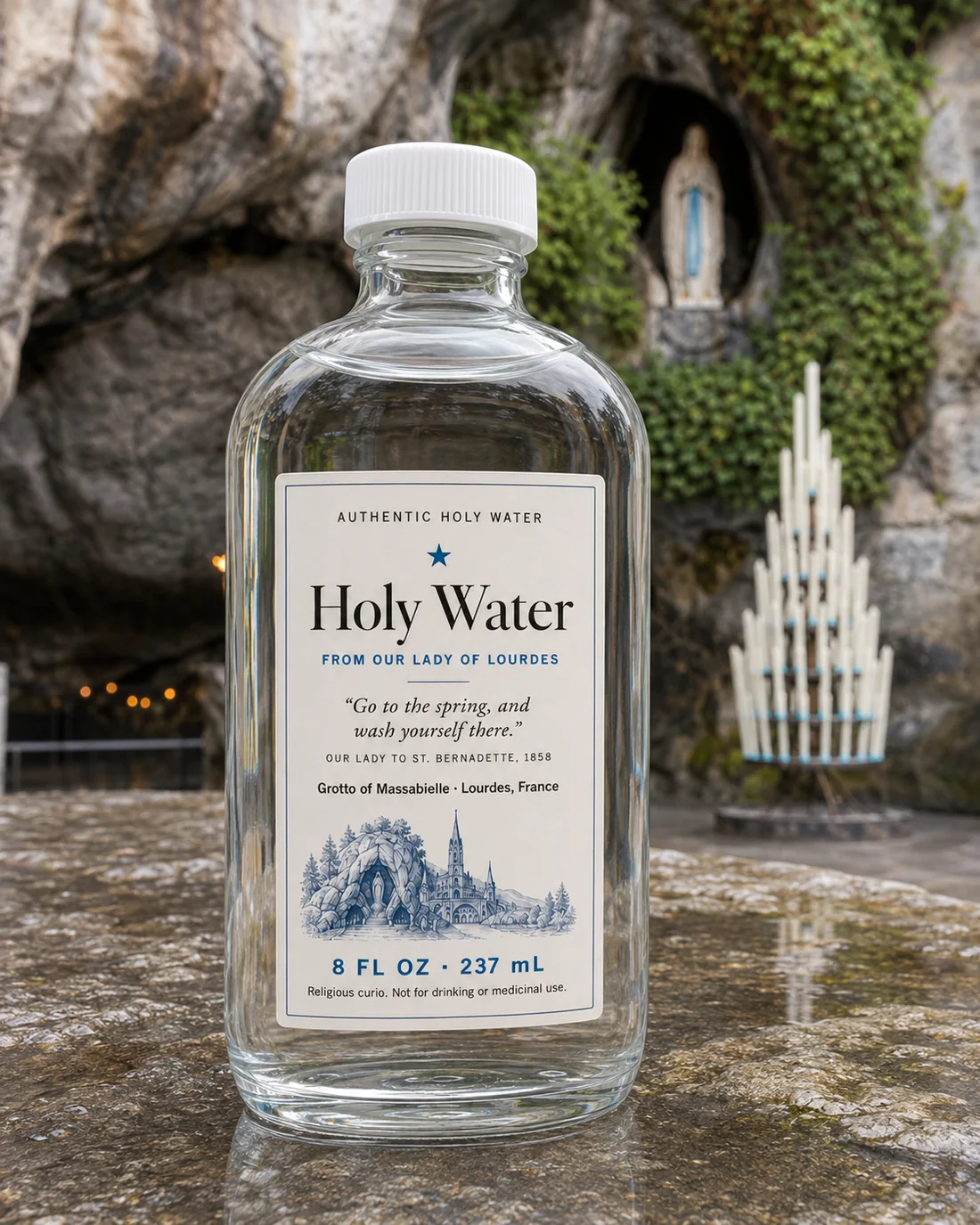
Then bring it to a source. Most parishes keep a font or a small tank of blessed water and are glad to let you fill a bottle for free, so ask your priest or the parish office where to go. Shrines like Lourdes offer water at public fountains. If you cannot get to either, honest sellers will send a filled and sealed bottle to your door.
Fill it, cap it, and if the water has not already been blessed, ask a priest to bless it. A short blessing turns ordinary water into a sacramental. If you already keep blessed water at home, you can simply top off a bottle from it.
How to keep holy water fresh
Holy water does not expire the way milk does. Once it is blessed it stays blessed. The water itself, though, is still water, and water left standing in a warm place can turn cloudy or pick up a smell.
A few simple habits keep it fresh. Store the bottle in a cool, clean spot out of direct sunlight. Refill fonts and small bottles now and then rather than letting water sit for years. Wash a bottle before you refill it. By long custom a little blessed salt is added when water is blessed, which helps it keep.
When water does go cloudy, or you simply have some to retire, dispose of it reverently. Pour it onto bare earth, into a garden, or into a church sacrarium, never down a household drain or into the trash. The ground returns it gently to creation.
Here is a routine that works. Keep a larger bottle in a cupboard as your supply, a small font by the front door, and a travel vial in the car. Refill the little ones from it every month or so, wash them as you go, and you will always have fresh water within reach.
A gentle word on what holy water is, and isn’t
Holy water is a sacramental, a holy sign the Church gives us to stir up faith and devotion. It is a keepsake for prayer, not a medicine and not a charm. The water we gather at Lourdes is offered as a devotional religious curio, not for drinking or medicinal use, and we make no promises about outcomes. If you would like the fuller story, our guide on whether you can drink holy water walks through what the Church actually teaches.
When you are ready for a bottle that arrives already filled and sealed with water from the Grotto, you can find our glass keepsakes in the shop, each paired with a handwritten prayer. Many readers also join the Daily Amen list for a short daily prayer and first word on newly hand collected batches.
Key takeaways
- A good bottle seals tight, stays clean, and fits how you will use it.
- Glass suits a shelf or altar. Food grade plastic suits travel, children, and bulk.
- Sizes from 2 to 16 ounces cover pocket, person, family, and household supply.
- Fill from a parish font, a shrine, or an honest seller, and ask a priest to bless it.
- Store it cool and dark, refill and wash often, and pour old water onto the earth.
Frequently asked questions
Can you use a regular bottle for holy water?
Yes. Any clean, food safe bottle can hold holy water, and many people repurpose a small glass bottle they already own. What matters is that it is clean and treated with reverence, not the brand on it.
Do holy water bottles need to be blessed?
The bottle itself does not need a blessing. The water does. A priest blesses the water, and you may carry it in any suitable vessel.
Are glass or plastic holy water bottles better?
Glass is best for a lasting keepsake and for a home altar. Plastic is better for travel, for children, and for handing out in quantity. Neither one is more holy than the other.
Where can I get my bottle filled?
Ask at your parish first, since most will fill it from the church font for free. Shrines offer water at public fountains, and trustworthy sellers ship filled, sealed bottles.