
Walk into almost any Catholic church and, a step or two inside the door, there it is. A small basin of water set into the wall or standing on a short pillar. People dip two fingers, cross themselves, and keep going.
Most of us have done it a thousand times without learning what it’s called.
It’s a font. In older English books you’ll see it called a stoup. And nothing about it belongs only to churches. Catholic families have kept small versions at home for centuries, by the front door or above a bed, so the same gesture carries into ordinary life.
If you’ve been thinking about a holy water holder for home use, here’s what you’re actually buying and where the custom came from.
What a Holy Water Font Actually Is
A font is a container that keeps blessed water where you can reach it. That’s the whole job.
What gives it meaning isn’t the vessel. It’s the blessing on the water inside, and the act of remembering your baptism when you touch it. A marble basin filled with tap water is just a bowl. A plain ceramic cup holding blessed water is a font.
The Church calls holy water a sacramental, a sacred sign that stirs up devotion and prepares us to receive grace. That’s why the font sits at the door rather than near the altar. It belongs to the moment of arriving.
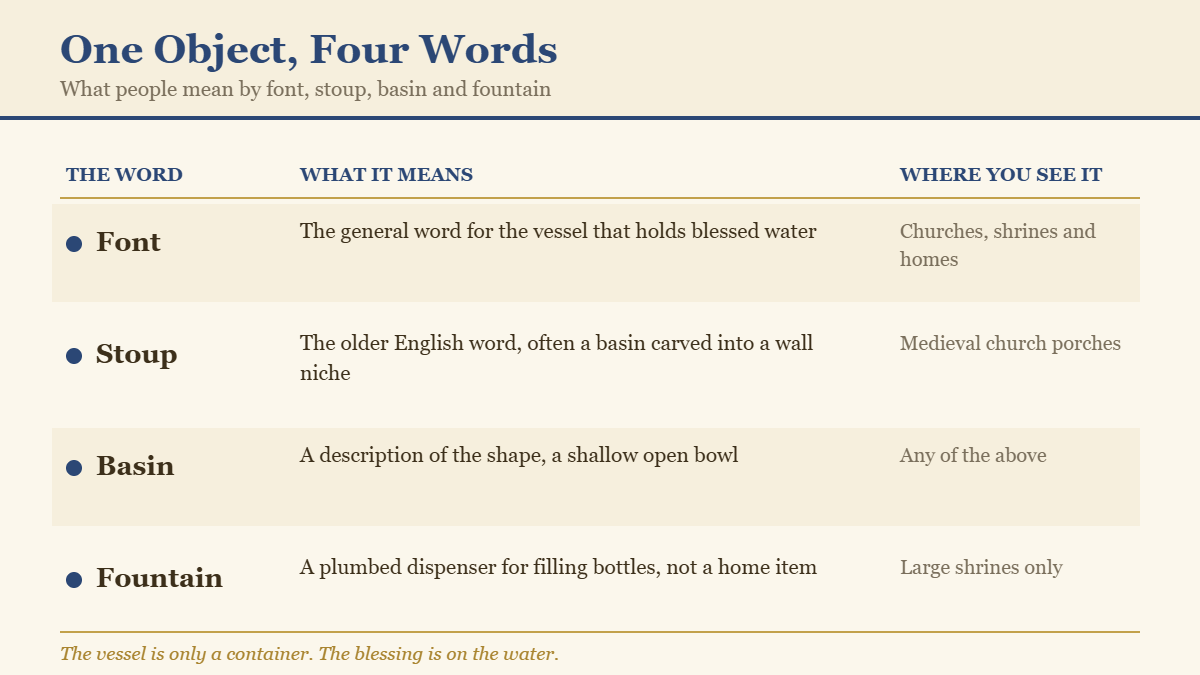
Font, Stoup, Basin, or Fountain: One Object, Four Words
Shoppers get tangled up here, and honestly the words do overlap.
Font is the general term for the vessel that holds holy water. It’s what most parishes and sellers use, and the safest word to search with.
Stoup is the older English word, used especially for a basin carved into a niche in a church wall. Medieval English churches often had one sunk into the stone inside the porch. A small wall mounted version for a house is sometimes called a bénitier, borrowed from the French.
Basin describes the shape more than the object, whether it hangs in a hallway or sits on a pillar in a cathedral.
Fountain is the one that misleads people. Some shrines have a plumbed dispenser so pilgrims can fill bottles. That’s a piece of plumbing, not a devotional object, and you won’t find a working one in a home font.
Where the Custom Came From
The habit is older than the fonts themselves.
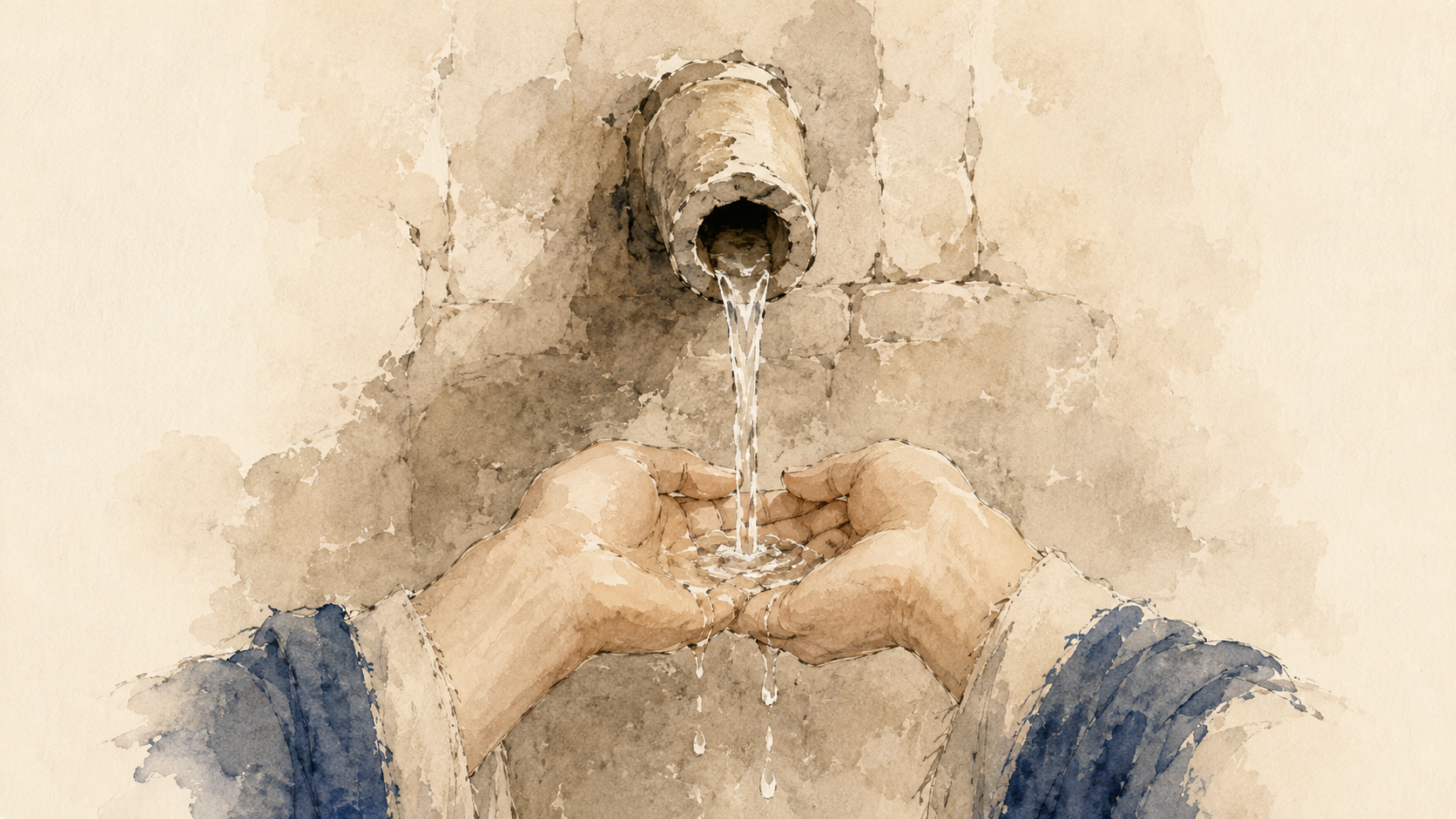
Early Christians washed their hands before going in to pray, at a fountain called a cantharus that stood in the open courtyard. As those courtyards shrank into a porch, the washing fountain gave way to small basins near the entrance.
By the ninth century the practice was established enough that Pope Leo IV directed priests to bless the people with holy water before Sunday Mass. In medieval England, carved stone stoups appeared in church porches and just inside doorways. Plenty are still there, worn smooth by centuries of hands.
The home version grew from the same instinct. Blessing yourself at your own door says something about the house you live in.
Choosing a Holy Water Holder for Home
Buy for the two things that matter. It has to hold water without weeping, and you have to be willing to use it every day.
Material
Ceramic and porcelain are the most common and the easiest to wipe clean. Glass shows the water and sits quietly on a shelf. Cast brass and pewter will outlive you. Carved stone feels closest to a church font, though it weighs more than most wall anchors were built for.
Size
Small is better. A font that holds a spoonful or two stays fresh and gets refilled often. A large one becomes a decoration you stop noticing by March.
Mounting
Wall fonts need a screw into something solid, not bare drywall. Standing fonts sit on a shelf or a hall table and move with you, which matters if you rent.
Refilling
Think about where the water will come from before you buy the vessel. Most parishes will let you fill a bottle from the church supply, and our guide on where to get holy water covers the rest. If you’d rather have water from the spring at Lourdes, we hand collect ours and send it in sealed glass bottles from our Etsy shop.
One example worth borrowing. A customer wrote to say she’d moved her plain white font from the front hall to the back door, because the back door is the one her family actually uses. The pretty one at the front had gone untouched for a year.
That’s the real test of a holy water holder for home life. Not how it looks, but whether your hand finds it.

Where to Put One in Your Home
Two traditional spots, and both are good.
The first is beside the door you use most, which isn’t always the front door. The point is that you pass it going out and coming back.
The second is by the bed. There’s a long custom of hanging a small stoup at the head of the bed, so blessing yourself is the last thing at night and the first thing on waking. Parents often bless a child’s forehead there.
A prayer corner works too. Our post on how to use holy water at home covers what to do with it once it’s on the wall.
Keeping the Water Fresh
Holy water is water, and it behaves like water. Change it every few weeks, or sooner if it clouds. Wipe the bowl out with a clean cloth when you refill, and keep the reserve bottle somewhere cool and dark.
Blessed water shouldn’t go down the drain. Pour what’s left onto bare ground, into a garden bed, or at the foot of a tree. Parishes do the same through a sacrarium, a basin that drains into the earth rather than the sewer.
Key Takeaways
- A font, or stoup, is a vessel that keeps blessed water within reach. The blessing is on the water, not the bowl.
- Font, stoup and basin all name the same object. A fountain is plumbing, and it isn’t a home item.
- The custom traces back to early Christians washing at a courtyard fountain before entering to pray.
- Pick a small font in a material you’ll keep clean, mount it into something solid, and place it by the door your family really uses.
Questions People Ask
Does the font itself need to be blessed?
No. The water carries the blessing, so an unblessed bowl is fine. Many people still ask a priest to bless a new font, and there’s nothing wrong with that. It just isn’t required.
Can I skip the font and use the bottle?
Yes. Plenty of homes keep the sealed bottle on a shelf and pour a little out when it’s needed. A font just makes the gesture quick enough that you’ll do it without thinking.
Why are church fonts empty sometimes?
During the Easter Triduum the fonts are emptied after the Holy Thursday evening Mass and left dry until the Easter Vigil, when new water is blessed. The emptiness is deliberate, and it’s meant to be felt.
Is Lourdes water different from parish holy water?
Water from the Lourdes spring comes from a real place with a real history, and the Sanctuary gives it freely to pilgrims. It becomes holy water the same way any water does, through the Church’s blessing. More on that in holy water from Lourdes.
A Small Vessel by the Door
A font isn’t complicated, and it doesn’t need to be expensive. It’s a bowl in the right place, kept full, so a moment of faith fits into a busy day without any effort at all.
If you’d like water from Lourdes for yours, we collect it by hand at the Sanctuary and send it in sealed glass bottles. The sizes and the handwritten prayer gift sets are on our shop page, and the Daily Amen list, a short prayer in your inbox each morning, is free to join from any page here.
A note on what holy water is and isn’t. It is a devotional keepsake and a sacramental of the Church, sold as a religious curio and not for drinking or medicinal use. We make no medical claims and promise no outcomes. Sacramentals dispose us to grace, and grace belongs to God.